
Mary Oliver, one of America’s most beloved and acclaimed poets, crafted a masterpiece of modern poetry with her work “Wild Geese.” First published in her 1986 collection “Dream Work,” this poem has since become one of Oliver’s most famous and widely quoted pieces, resonating deeply with readers around the world.
In this article we explore Mary Oliver’s “Wild Geese“, providing our interpretation of this inspirational piece of poetry. Before we jump into analysing “Wild Geese”, lets find out a bit more about Mary Oliver.
Mary Oliver
Mary Oliver (1935-2019) was a celebrated American poet known for her accessible and insightful writing that often focused on the natural world. Born in Maple Heights, Ohio, Oliver began writing poetry at a young age and published her first collection, “No Voyage and Other Poems,” in 1963. Throughout her career, she won numerous prestigious awards, including the Pulitzer Prize for Poetry in 1984 for her collection “American Primitive” and the National Book Award for Poetry in 1992 for “New and Selected Poems.” Oliver’s work is characterized by its clear, precise language and its deep connection to nature, often exploring themes of wonder, spirituality, and the human relationship with the environment.
Self-Forgiveness and Acceptance
“Wild Geese” is a powerful testament to self-acceptance and the human connection to nature. In just 18 lines, Oliver manages to convey a profound message about finding one’s place in the world and the healing power of the natural environment.
The poem begins with the striking lines:
“You do not have to be good.
Extract from “Wild Geese” by Mary Oliver, 2025
You do not have to walk on your knees
for a hundred miles through the desert repenting.
You only have to let the soft animal of your body
love what it loves.”
These opening lines set the tone for the poem’s theme of self-forgiveness and acceptance. Oliver challenges the notion that one must constantly strive for perfection or atone for perceived shortcomings.
Imagery and Symbolism
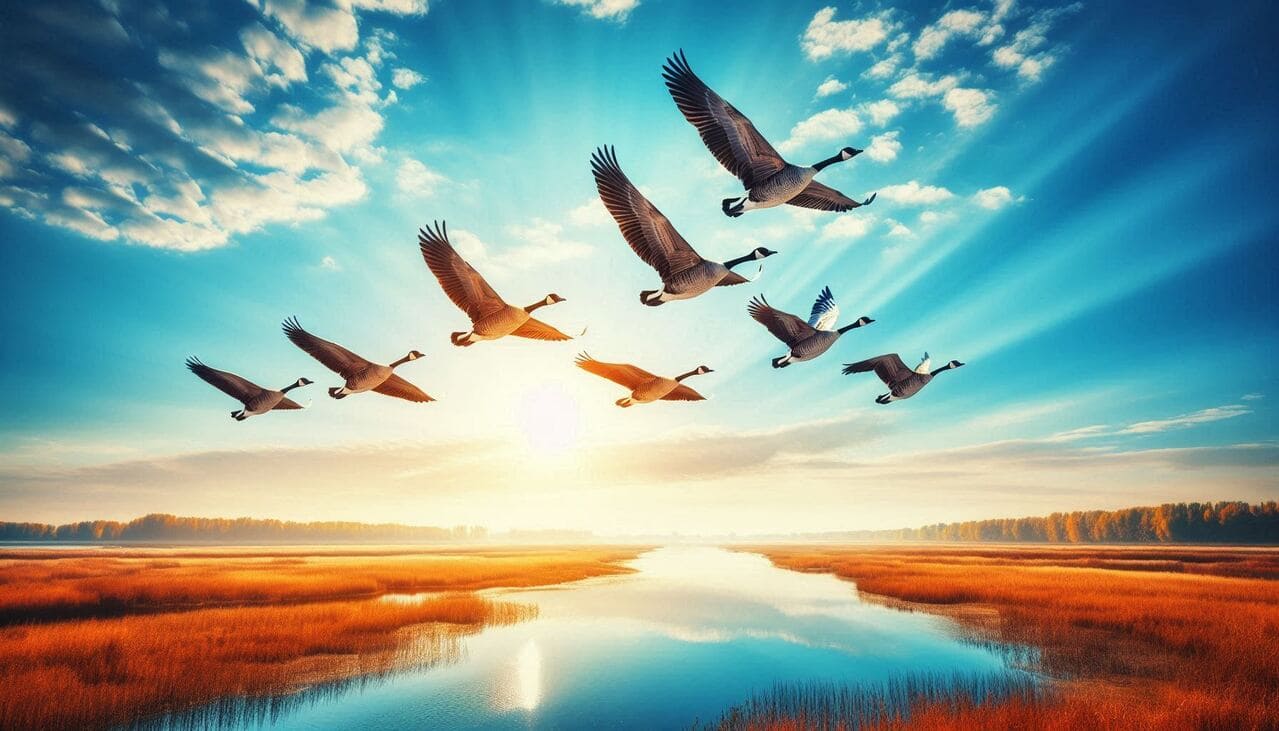
The poem’s wild geese serve as a metaphor, representing freedom, natural instinct, and the interconnectedness of all living things. Oliver writes:
“Meanwhile the wild geese, high in the clean blue air,
Extract from “Wild Geese” by Mary Oliver, 2025
are heading home again.”
This image of the geese in flight symbolizes the natural order of things and the idea that there is a place for everyone in the world. The geese follow their instincts without question or self-doubt, a behavior Oliver suggests humans might learn from.
Belonging
One of the most powerful aspects of “Wild Geese” is its message of belonging. Oliver asserts that despite our individual struggles and feelings of isolation, we are all part of a larger world:
“Whoever you are, no matter how lonely,
Extract from “Wild Geese” by Mary Oliver, 2025
the world offers itself to your imagination,
calls to you like the wild geese, harsh and exciting –
over and over announcing your place
in the family of things.”
These closing lines remind readers that they have a rightful place in the world, just as the geese do. The poem encourages us to find solace in nature and to recognize our connection to the broader universe.
Impact and Legacy
“Wild Geese” has had a lasting impact on readers and the literary world. Its accessible language and message have made it a popular choice for poetry readings, personal reflection, and even therapeutic settings. The poem’s themes of self-acceptance, connection to nature, and finding one’s place in the world continue to resonate with people of all ages and backgrounds.
Mary Oliver’s ability to distill complex emotions and philosophical ideas into clear, evocative language is on full display in “Wild Geese.” The poem stands as a testament to her skill as a poet and her deep understanding of the human condition. It continues to offer comfort and inspiration to readers, reminding us of the beauty and belonging we can find in the natural world and within ourselves.
Thank you for reaching the end of this article, if you enjoyed it, we have an article about a poem called Invictus which may interest you. If you have any thoughts or comments about this article, please feel free to reach out to us on our contact page.