
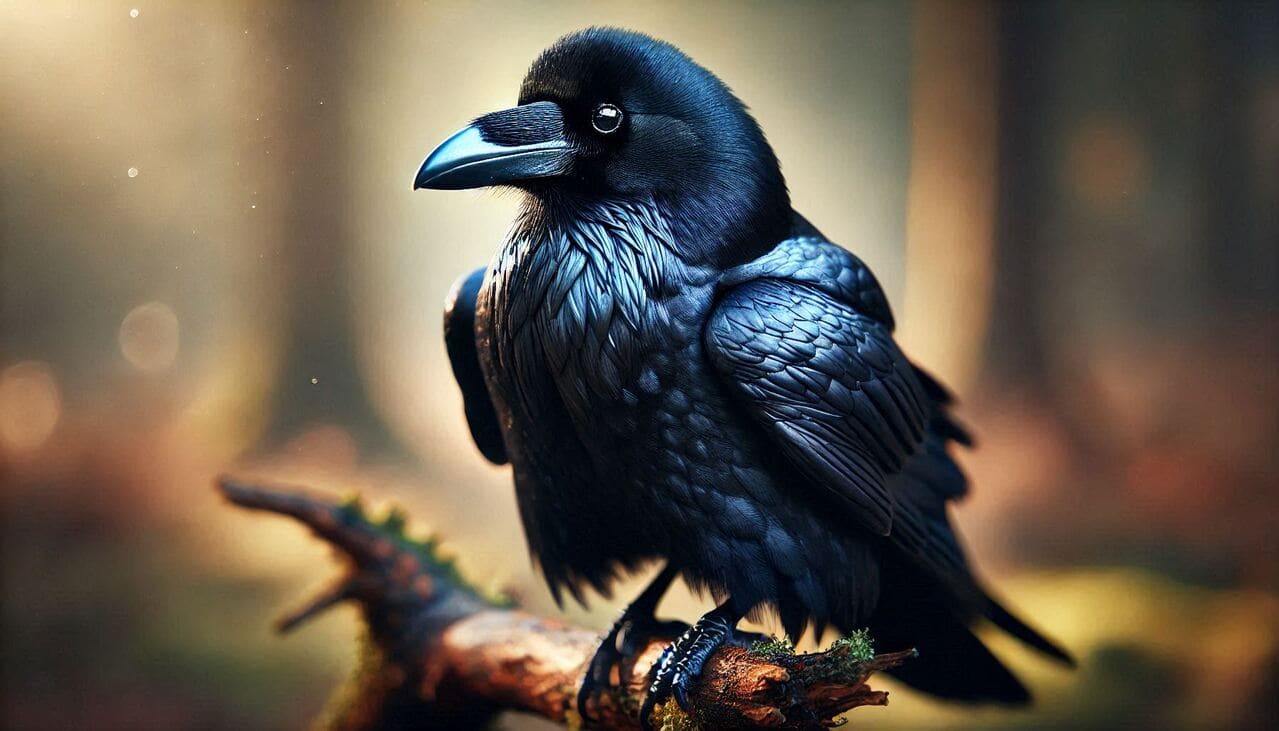
“The Raven” by Edgar Allan Poe stands as one of the most iconic poems in American literature. Published in 1845, this narrative poem has captivated readers for generations with its haunting atmosphere, lyrical quality, and exploration of loss and despair.
In this article we explore Poe’s motivation for writing “The Raven”, the themes and his impact and legacy.
Historical Context and Motivation
Edgar Allan Poe’s motivation for writing “The Raven” was multifaceted, stemming from both personal and professional circumstances. In the mid-1840s, Poe was struggling with poverty, alcoholism, and the declining health of his beloved wife, Virginia. These personal hardships likely contributed to the poem’s themes of loss, grief, and psychological torment.
Professionally, Poe aimed to create a work that would appeal to both critical and popular audiences. He deliberately crafted “The Raven” to be accessible yet profound, combining a haunting narrative with meticulously structured rhyme and rhythm. Poe himself explained in his essay “The Philosophy of Composition” that he chose a raven as the poem’s central symbol for its ominous nature and the melancholy tone of its repetitive “nevermore.” Furthermore, Poe was keenly aware of the literary market and sought to create a memorable, widely appealing work that would boost his reputation and financial situation.
The poem’s immediate success upon publication in 1845 validated Poe’s artistic and commercial motivations, though it did little to alleviate his personal struggles.
Plot and Structure
The poem tells the story of a distraught man visited by a mysterious raven on a bleak December night. As he questions the bird, its only response is “Nevermore,” driving the narrator deeper into madness.
Key structural elements include:
- 18 stanzas of six lines each
- Complex rhyme scheme (ABCBBB)
- Internal rhyme and alliteration
- Trochaic octameter, creating a mesmerizing rhythm
Themes and Symbolism
Edgar Allan Poe explored several profound themes in “The Raven,” making it a rich and complex work of literature. Here are the main themes:
- Grief and Loss
- The narrator’s mourning for his lost love, Lenore, is central to the poem.
- The raven serves as a constant reminder of this loss.
- Descent into Madness
- The narrator’s mental state deteriorates throughout the poem.
- His increasingly irrational interactions with the raven showcase this decline.
- The Finality of Death
- The raven’s repeated “Nevermore” emphasizes the permanence of death.
- The narrator struggles to accept that he will never see Lenore again.
- Memory and Remembrance
- The narrator is haunted by memories of Lenore.
- The poem explores how painful memories can persist and torment the living.
- The Conflict between Rationality and Emotion
- The narrator tries to apply logic to the raven’s presence but is overcome by emotional responses.
- This reflects the human struggle between reason and feeling.
- Isolation and Loneliness
- The setting (late night, December) and the narrator’s solitude emphasize his isolation.
- The raven’s presence paradoxically increases this sense of loneliness.
- The Supernatural
- The mysterious nature of the raven blurs the line between reality and the supernatural.
- This theme reflects broader Gothic literary traditions.
- Self-Torture
- The narrator seems to deliberately prolong his suffering by continuing to question the raven.
- This suggests a theme of psychological self-punishment.
- The Nature of Beauty in Sadness
- Poe explores the idea that there is a certain beauty or poetic quality in melancholy and loss.
Literary Impact and Legacy
“The Raven” has left an indelible mark on literature and popular culture:
- It influenced the development of symbolism in poetry
- The poem has been widely referenced, parodied, and adapted in various media
- It cemented Poe’s reputation as a master of the macabre
Edgar Allan Poe’s “The Raven” remains a cornerstone of American literature, continuing to inspire and haunt readers with its melancholic beauty and psychological depth. Its enduring popularity is a testament to Poe’s genius in crafting a work that speaks to the universal human experience of loss and the struggle with mortality.
If you would like to read the full poem, you can find it here, alternatively we have another article about “The Bells” poem also by Poe.
Thank you for reaching the end of this article. If you have any thoughts or comments about this article, please feel free to reach out to us on our contact page.