
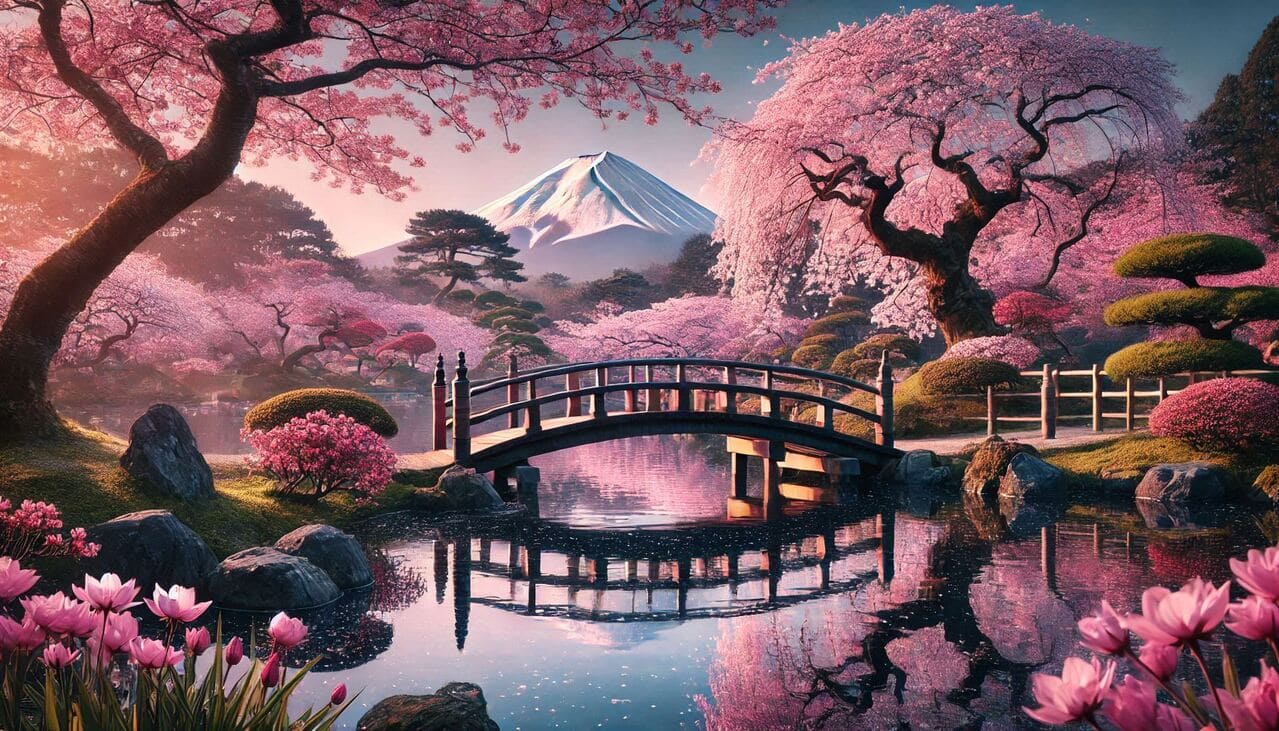
Haiku, a form of Japanese poetry, has captivated readers and writers around the world for centuries with its ability to distill complex emotions and vivid imagery into just a few carefully chosen words. This beautiful and concise form of expression continues to inspire poets and nature lovers alike, offering a unique way to capture fleeting moments and profound observations.
Origins
Haiku emerged in Japan during the 17th century, evolving from an older form of collaborative poetry called renga. The term “haiku” was coined by the poet Masaoka Shiki in the late 19th century, but the form had already been popularized by masters such as Matsuo Bashō, Yosa Buson, and Kobayashi Issa.
Traditionally, haiku adhered to a strict structure of 17 on (sound units) arranged in three phrases of 5, 7, and 5. In English, this structure is often interpreted as syllables, though many modern poets choose to focus on the spirit of haiku rather than adhering rigidly to syllable counts.
The Format of Haiku
Several elements are central to the art of haiku:
- Kigo: A seasonal reference that anchors the poem in a specific time of year.
- Kireji: A cutting word that creates a pause or shift in the poem’s flow.
- Juxtaposition: The contrast of two images or ideas to create deeper meaning.
- Present tense: Haiku typically describe immediate, current experiences.
- Sensory imagery: Vivid depictions that engage the reader’s senses.
These elements work together to create a poem that is both simple and profound, offering readers a window into a singular moment or observation.
The Power of Simplicity
The beauty of haiku lies in its simplicity and its ability to say much with little. By focusing on a single moment or image, haiku poets invite readers to pause and reflect, encouraging a deeper appreciation of the world around us. This minimalist approach can lead to powerful insights and emotional resonance.
Consider this famous haiku by Bashō:
An old silent pond...
A frog jumps into the pond,
splash! Silence again.
In just 17 syllables, Bashō paints a vivid scene, captures a moment of action, and returns to stillness, all while evoking themes of nature, time, and the cyclical nature of existence. Before we move onto the next section, we have an article about another structured poem called Acrostic, which may be of interest.
Famous Haiku Poems
“A spring night:
Seisensui (1884-1976)
The sigh of the bamboo grove,
And the moon.”
“The light of a candle
Yosa Buson (1716-1784)
Is transferred to another candle—
Spring twilight”
“Don’t worry, spiders,
Kobayashi Issa (1763-1828)
I keep house
casually.”
“I want to sleep
Masaoka Shiki (1867-1902)
Swat the flies
Softly, please.”
“Over the wintry
Natsume Sōseki (1867-1916)
forest, winds howl in rage
with no leaves to blow.”
“In a Station of the Metro”
Ezra Pound (1885-1972)
“The apparition of these faces in the crowd:
Petals on a wet, black bough.”
“The taste
Jack Kerouac (1922-1969)
of rain
—Why kneel?”
“Whitecaps on the bay:
Richard Wright (1908-1960)
A broken signboard banging
In the April wind.”
“First autumn morning:
Murakami Kijo (1865-1938)
the mirror I stare into
shows my father’s face.”
Whether as a form of literary expression, a mindfulness exercise, or simply a way to appreciate the beauty of everyday life, haiku continues to enrich our understanding of the world and our place within it.
Thank you for reaching the end of this article – we hope you enjoyed it. If you have any thoughts or comments about this article, please feel free to reach out to us on our contact page.